
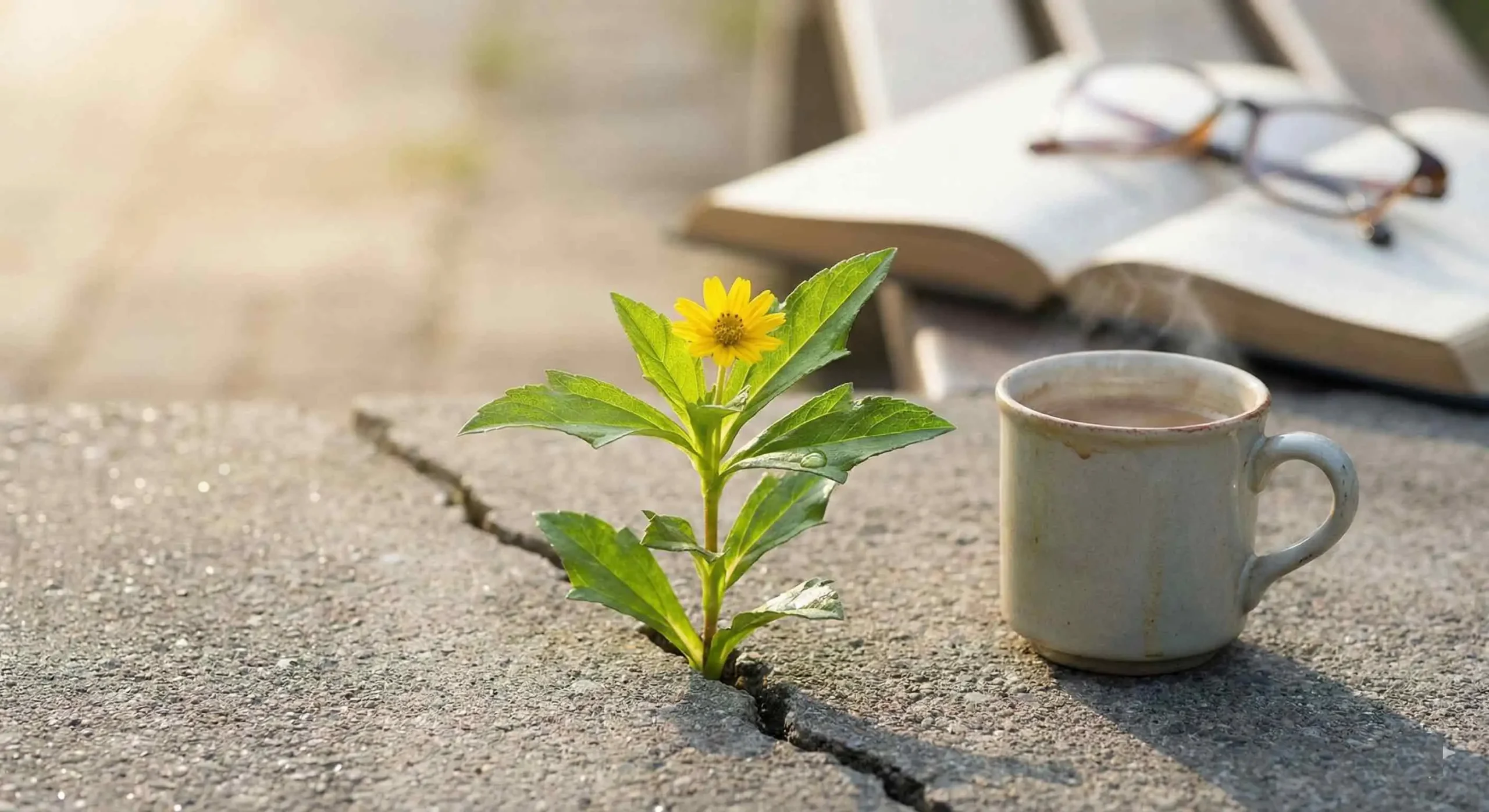
You don’t need to quit your job, leave your relationship, or move to Bali to choose yourself. You don’t need a dramatic gesture, a clean break, or a fresh start. Those might come eventually. But transformation—real, lasting transformation—doesn’t usually begin with burning your life down. It begins with something much smaller. Much quieter. Much easier to dismiss as insignificant.
It begins with tiny rebellions. The small, seemingly inconsequential moments when you choose yourself over the path of least resistance. When you put your own needs first, even when it’s uncomfortable, even when no one’s watching, even when it feels selfish.
These are the moments that change everything. Not all at once. But slowly, steadily, until one day you look up and realise you’ve built a completely different life.
What Small Rebellions Actually Look Like
A small rebellion isn’t grand or dramatic. It doesn’t make good content. It won’t inspire anyone scrolling past your life on social media. But it’s the quiet act of prioritising your own wellbeing when everything in you has been trained to prioritise everyone else’s.
It’s saying “I can’t” when you mean “I don’t want to” and not following it with an elaborate excuse.
It’s going to bed at 9pm on a Friday night because you’re exhausted, even though everyone else is going out.
It’s not responding to a message immediately just because you saw it.
It’s ordering what you actually want at a restaurant instead of choosing something cheaper or healthier to please someone else.
It’s sitting in your car for five extra minutes before going inside because you need those five minutes of silence.
It’s cancelling plans you genuinely don’t have energy for, even when there’s no “good” reason beyond “I don’t want to.”
It’s unfollowing accounts that make you feel worse about yourself, even if they’re not technically “bad.”
It’s eating when you’re hungry instead of waiting until it’s “time” to eat.
It’s leaving the party early. Turning down the opportunity. Saying no to the extra shift. Choosing sleep over productivity. Choosing rest over achievement. Choosing yourself.
None of these will change your life in isolation. But accumulated over days, weeks, months? They reshape everything.
Why Small Rebellions Feel So Hard
If choosing yourself is just a series of small decisions, why does it feel impossible?
Because we’ve been trained—deeply, thoroughly, from childhood—to prioritise other people’s comfort over our own. To be accommodating. Flexible. Easy. To not make waves, not be difficult, not take up too much space or ask for too much or need too much.
Every time you choose yourself, you’re going against years of conditioning that says your needs matter less than other people’s convenience. That your rest is less important than their expectations. That saying no makes you selfish, difficult, unkind.
The guilt is immediate. You cancel plans and instantly imagine the other person hurt, disappointed, telling their friends how flaky you are. You don’t respond to a text and your nervous system screams that you’ve been rude, that they’ll be upset, that you’re a bad friend.
This is the saltwater. The voice that tells you choosing yourself is selfish, that you should push through, that everyone else manages so why can’t you. It sounds like self-discipline but it’s actually self-abandonment. And drinking it only makes you thirstier for the approval, the peace, the sense of being a good person that never quite arrives.
The Radical Act of Ordinary Selfishness
Here’s the truth they don’t tell you: a certain amount of selfishness is essential to your survival. Not the kind that harms others or disregards their humanity. The kind that simply acknowledges that you, too, are a person whose needs matter. Whose rest matters. Whose preferences matter. Whose capacity has limits.
This feels radical because we live in a culture—especially if you’re socialised as a woman, as a caregiver, as someone from a marginalised community—that treats your needs as optional extras. Nice if you can fit them in. But not as important as being available, accommodating, useful to others.
Small rebellions push back against this. They say: my time is valuable. My energy is finite. My comfort matters. I don’t owe anyone an explanation for prioritising my own wellbeing.
And yes, this is selfish. But the kind of selfish that keeps you from burning out. The kind that means you’re still here next month, next year, still able to show up for the people and causes that actually matter to you—because you haven’t depleted yourself trying to meet every expectation from every direction
The Accumulation of Small Choices
One small rebellion changes nothing. You say no to plans once and your life looks exactly the same. You leave work on time for a day and nothing shifts. You skip scrolling for an evening and the world keeps turning.
But small rebellions compound. Each time you choose yourself, you’re strengthening a neural pathway that says: my needs matter. You’re teaching yourself that the world doesn’t end when you prioritise your own wellbeing. You’re proving, quietly, that you can say no and people still like you. That you can rest and still be productive. That you can take up space and still be loved.
Research in behavioural psychology shows that lasting change comes not from dramatic overhauls but from tiny, consistent actions repeated over time. James Clear, author of Atomic Habits, argues that improving by just 1% every day leads to being 37 times better over a year. Small rebellions work the same way.
Each small act of self-prioritisation is a 1% shift. Individually imperceptible. Collectively transformative.
You don’t notice it happening. Then one day you realise: you don’t feel guilty for resting anymore. You say no without immediately apologising or explaining. You know your limits and you respect them. You’ve built a life that doesn’t require constant self-sacrifice to maintain.
That didn’t happen because of one big decision. It happened because of a thousand small ones.
When Small Rebellions Trigger Big Reactions
Here’s what no one warns you about: when you start choosing yourself consistently, some people won’t like it.
The people who benefited from your boundarylessness will push back. Suddenly you’re “different.” You’ve “changed.” You’re not as fun, as available, as easy as you used to be. The people who loved the version of you that said yes to everything don’t know what to do with this version that sometimes says no.
This can feel devastating. You’re not doing anything wrong—you’re just protecting your energy, your time, your wellbeing. But to people who were used to unlimited access to you, even small boundaries feel like rejection.
This is when small rebellions reveal their true cost. Choosing yourself sometimes means disappointing people. Losing relationships that only worked when you were accommodating. Discovering that some connections were built on your willingness to sacrifice yourself, not on mutual care.
And this hurts. But it’s also clarifying. The people who stay, who adjust, who respect your boundaries—these are your people. The ones who leave when you start choosing yourself were never going to support your wellbeing anyway.
The Permission You Don’t Need (But Are Waiting For)
You’re waiting for permission. For someone to tell you it’s okay to rest, to say no, to choose yourself. For conditions to be perfect enough that prioritising your own needs finally feels justified.
That permission isn’t coming. Because the world benefits from your self-sacrifice. From your tireless availability. From your willingness to put yourself last. No one’s going to give you permission to stop doing the thing that makes their life easier.
So give yourself permission. Not for the big dramatic exits—those might never feel justified. But for the small rebellions. For the tiny, daily acts of choosing yourself that no one else will notice or celebrate but that slowly, steadily, build a life that doesn’t require you to constantly abandon yourself to maintain it.
You don’t need a good enough reason. “I don’t want to” is a complete sentence. “I need to rest” requires no justification. “That doesn’t work for me” needs no explanation.
Small rebellions are how you take your life back. Not all at once. Just one tiny act of self-prioritisation at a time.
A Catalogue of Small Rebellions
In case you need concrete examples, here are small rebellions you’re allowed to commit:
- Turning off your phone during dinner, even if you’re expecting messages
- Taking a full lunch break away from your desk
- Not checking work emails after hours, even if others do
- Blocking or muting people on social media without explaining why
- Leaving events when you’re ready, not when it’s socially acceptable
- Saying “I’ll think about it” instead of immediately saying yes
- Not volunteering for things just because no one else has
- Spending money on something that makes you happy even if it’s “frivolous”
- Choosing the easier option even when you “should” choose the harder one
- Asking for help before you’re desperate
- Resting before you’re exhausted
- Setting a boundary before you’re resentful
- Eating food that brings you joy, not just fuel
- Wearing clothes that feel good, not just look good
- Doing nothing and calling it nothing, not rest or self-care—just nothing
- Choosing yourself, repeatedly, in ways too small to justify but too important to skip
The Still in the Small Rebellions
Remember the distillation still? It doesn’t work through dramatic intervention. It works through steady, consistent heat applied over time. Small rebellions are the same.
Each tiny act of choosing yourself is a degree of heat applied to the saltwater of self-sacrifice. Individually, one degree changes nothing. But maintained consistently, those degrees accumulate. The saltwater begins to transform. What was undrinkable becomes pure. What was depleting becomes nourishing.
This is the still at work. Not in grand gestures or dramatic transformations, but in the accumulation of small, quiet choices made again and again until they’re no longer rebellions—they’re just how you live.
You can’t rush this process. You can’t force transformation overnight. You can only show up, day after day, and choose yourself in small ways. Trust that those choices matter. That they’re building something even when you can’t see it yet.
Because one day you’ll look around and realise: you’re not exhausted all the time anymore. You don’t feel guilty for resting. You have energy for the things that actually matter because you stopped spending it on things that don’t. You’ve built a life that fits you instead of constantly contorting yourself to fit your life.
And it started with something small. A tiny rebellion. A quiet act of choosing yourself when everything told you not to.
That’s how transformation happens. Not all at once. Just one small rebellion at a time.
Leave a Reply