
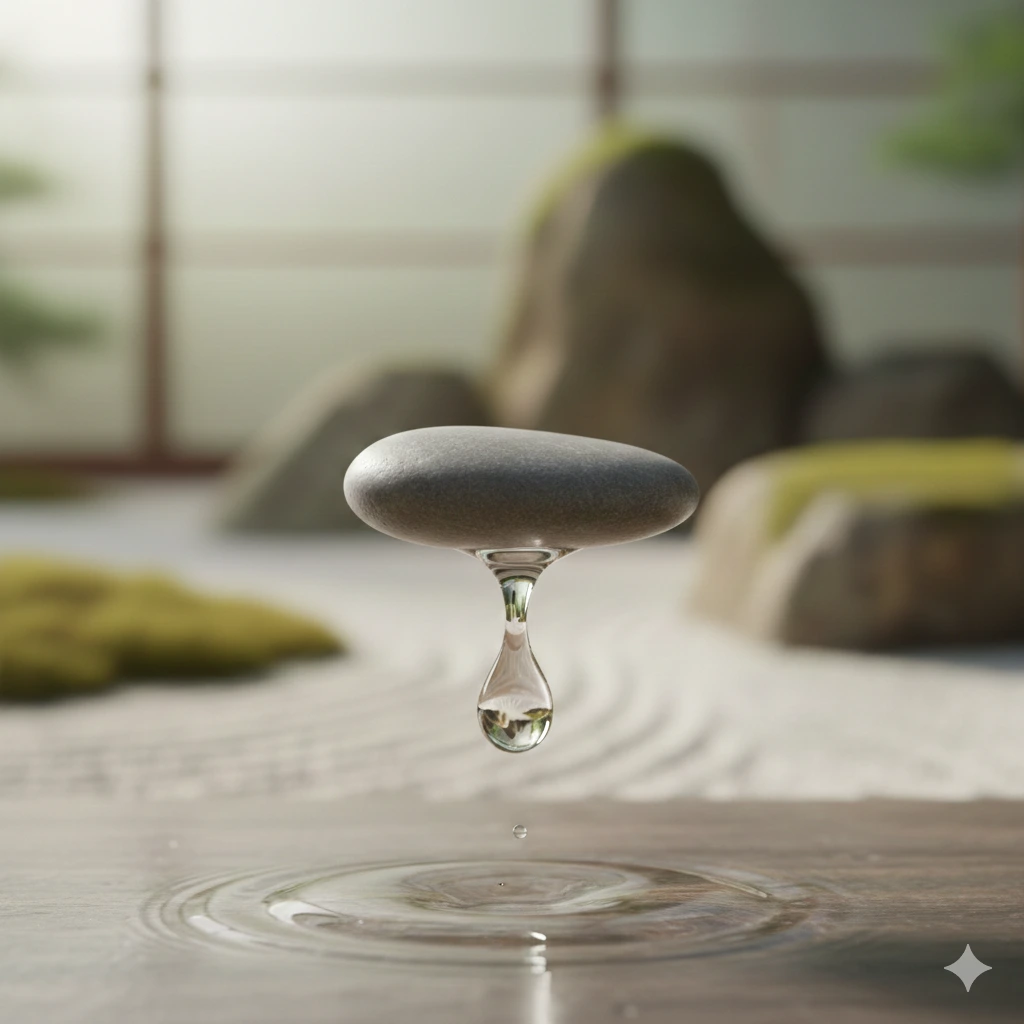
Someone says something that triggers you. Before you even register what’s happening, you’ve already reacted—snapped back, shut down, walked away, said something you’ll regret. The words are out of your mouth before you’ve had a chance to think. The damage is done before you’ve even chosen to do it.
This is what happens when we live without the pause. When we collapse the space between what happens to us and how we respond. When we’re so reactive that stimulus and response become one seamless, unconscious motion.
But there’s another way. A sacred space that exists—however briefly—between what life throws at us and how we meet it. This is the still. And learning to inhabit it changes everything.
The Space Where Freedom Lives
Viktor Frankl, psychiatrist and Holocaust survivor, wrote one of the most profound observations about human consciousness: “Between stimulus and response there is a space. In that space is our power to choose our response. In our response lies our growth and our freedom.”
Read that again. Between stimulus and response there is a space. Not sometimes. Not when we’re calm or centred or have been meditating for years. Always. There is always a space. The question is whether we’re aware of it—and whether we’ve trained ourselves to access it.
Most of us live as if the space doesn’t exist. Something happens, we react. Someone speaks, we respond automatically. We’re cut off in traffic, we rage. We’re criticised, we defend. We’re hurt, we hurt back. Stimulus, response. Cause, effect. Action, reaction.
We’ve become machines. Predictable. Programmed. Running on autopilot through our own lives.
Why We Skip the Pause
Our nervous systems evolved for speed, not contemplation. When a predator appeared, our ancestors who paused to consider their response became lunch. Those who reacted instantly—fight, flight, freeze—survived to pass on their genes.
We’ve inherited that hair-trigger nervous system. Except now the “predators” are things like critical emails, traffic jams, social media comments, and difficult conversations. Our bodies can’t tell the difference between a genuine threat and a perceived one, so we react to both with the same urgency.
The result? We live in a perpetual state of reactivity. Always on alert. Always ready to defend, to justify, to protect ourselves from threats that aren’t actually life-threatening.
We drink the saltwater of reactivity—quick, automatic, seemingly satisfying in the moment—only to find ourselves thirstier than before. More drained. More disconnected. More stuck in patterns we don’t want but can’t seem to break.
What the Pause Actually Is
The sacred pause isn’t about becoming passive or slow to respond. It’s not about suppressing your reactions or pretending you don’t feel what you feel. It’s about creating just enough space between what happens and what you do about it to allow for choice.
That space might be a single breath. It might be a moment of awareness: oh, I’m feeling triggered right now. It might be a physical sensation you notice before the emotion takes over. It might be counting to three, stepping away, or simply acknowledging to yourself: I don’t have to respond to this immediately.
The pause is sacred because it’s where transformation becomes possible. It’s where the distillation happens. In that brief moment of stillness, you can separate what you’re feeling from what you do about it. You can observe the urge to react without being consumed by it. You can choose a response that aligns with who you want to be rather than defaulting to who you’ve always been.
The Neuroscience of the Pause
When something triggers us, our amygdala—the brain’s threat-detection system—hijacks our prefrontal cortex, the part responsible for rational thought and decision-making. This is sometimes called an “amygdala hijack,” and it happens in milliseconds.
Research shows that it takes approximately 6-20 seconds for the initial surge of stress hormones to start clearing from your bloodstream. That means if you can create even a 10-second pause, you give your prefrontal cortex a chance to come back online. You create space for conscious choice instead of unconscious reaction.
This isn’t just psychology—it’s physiology. The pause literally rewires your brain.Each time you notice the impulse to react and choose to pause instead, you’re strengthening neural pathways that support self-regulation. You’re training your nervous system to tolerate discomfort without immediately needing to discharge it.
“Respond; don’t react. Listen; don’t talk. Think; don’t assume.” —Raji Lukkoor
What Happens in the Pause
In that sacred space between stimulus and response, several things become possible:
Awareness emerges. Instead of being swept away by the feeling, you become aware that you’re feeling it. This creates crucial distance. You’re not your anger. You’re experiencing anger. That distinction is everything.
Options appear. When you’re purely reactive, there’s only one path: the well-worn groove of your habitual response. In the pause, you remember that you have choices. You can respond differently this time.
Wisdom speaks. Beneath the noise of reactivity, there’s a quieter, wiser part of you that knows what actually serves you. The pause creates space for that wisdom to be heard.
Compassion arises. For yourself, for the other person, for the shared difficulty of being human. When you’re not consumed by reactivity, you can see more clearly. You can respond from love instead of fear.
Practising the Sacred Pause
The pause is a practice, not a personality trait. No one is naturally good at it. We all have to train ourselves to find that space and inhabit it, again and again and again.
Here’s how to begin:
- Notice your triggers. What situations, people, or comments reliably set you off? Awareness is the first step. You can’t pause if you don’t realise you’re being triggered.
- Anchor in the body. When you feel triggered, bring your attention to your physical sensations. Where do you feel it? Your chest? Your jaw? Your stomach? This pulls you out of the reactive mind and into present-moment awareness.
- Take one conscious breath. Just one. In through the nose, out through the mouth. This signals to your nervous system that you’re safe enough to slow down.
- Name what you’re feeling. “I’m feeling defensive.” “I’m feeling angry.” “I’m feeling hurt.” Naming emotions reduces their intensity and creates psychological distance.
- Ask yourself: What do I actually want here? Not what feels good in the moment, but what serves your values, your relationships, your long-term wellbeing.
When the Pause Feels Impossible
Sometimes the pause feels completely inaccessible. The trigger is too strong, the emotion too overwhelming, the pattern too ingrained. You know you should pause, you want to pause, but you simply can’t find the space.
This is normal. This is part of the practice. The point isn’t to always succeed at pausing—it’s to keep returning to the intention. To notice when you’ve reacted automatically and to bring curiosity instead of judgment.
Why did I react that way? What was I actually feeling beneath the reaction? What was I trying to protect? What do I need?
These questions, asked with genuine curiosity, create the pause retroactively. They’re still distilling the saltwater of reactivity into something purer, even if it happens after the fact.
The Pause in Relationships
Nowhere is the sacred pause more transformative—or more difficult—than in our closest relationships. With the people we love most, we’re often the most reactive. They know exactly which buttons to push because, often, they installed them.
But imagine what becomes possible when you bring the pause into your relationships. Instead of the same argument you’ve had a hundred times, playing out its predictable script, there’s space for something new. For actually hearing each other. For responding to what’s being said rather than what you assume is being said.
The pause doesn’t mean you won’t feel angry, hurt, or frustrated. It means you won’t let those feelings dictate your response. It means you can feel all of it and still choose how to engage.
This is the still at work in real time. Not the absence of emotion, but the presence of choice within it.
The Still Within the Storm
The sacred pause isn’t about creating a life without triggers or challenges. It’s about finding stillness within the inevitable storms. It’s about learning that you don’t have to react to every stimulus, respond to every provocation, or justify every feeling with an action.
You can feel the anger and not send the text. Feel the hurt and not slam the door. Feel the fear and not lash out. You can create space between what you feel and what you do about it.
This is the distillation process made practical. Taking the saltwater of reactivity—the knee-jerk responses that make us thirstier for connection, understanding, peace—and transforming it into something that actually nourishes. Into responses that reflect who you want to be rather than who you’ve habitually been.
The pause is where transformation lives. Between what happens and what you do about it. Between stimulus and response. Between the saltwater and the still.
It’s always there. You just have to remember to look for it.
Leave a Reply